

I’ve been reading a lot of blog posts about getting through the winter months by writing lovely letters to people, going ice skating, and drinking hot chocolate.
Screw that, I’m doing a hell of a lot of online shopping and then going to the desert.
This post covers the first half of that sentence.
It’s my favourite week of the darker months, which means it’s Amazon Black Friday deals week!! I love everything about it, from spending far too much money on super awesome discounted deals, to flicking between horror and disbelief at some of the crazy/dull stuff that gets listed.
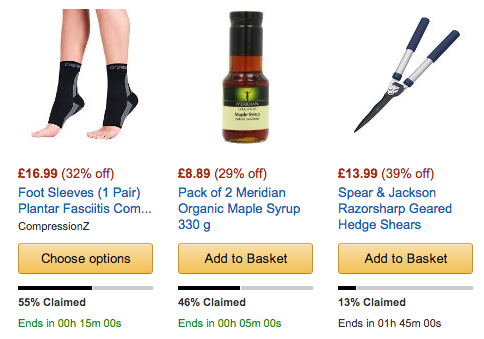
Someone, somewhere, is really excited about these.
When Amazon first started doing these deals, it was possible to follow everything easily. There were only a handful of products for every time slot, and it was easy to browse because it was limited to midnight that day. Now they add in new products constantly, so my old strategy of checking the day’s products in advance and recording the times to check back doesn’t work so well (don’t tell me you’re surprised I overplan Black Friday Deals Week just like everything else I do).
Anyway, I thought I’d share some of the tips and tricks I’ve learned over the years that are still very relevant and should help you get the most out of Black Friday whichever country you’re in.
Before the deals start
- Make sure you get Amazon’s Black Friday deals emails, because they’ll give you some info about what’s coming up every day. This is also a clue as to what the most popular items will be, so make sure you get in on those quickly.
- Set an overall budget for the week. It will help you make better buying decisions and stop you being horrified when you realise how much stuff you’ve bought. Keep a running total in note form as the week progresses so you can keep track easily. If you have the budget, buy presents and put them away for birthdays, anniversaries, or even next Christmas.
- Have realistic expectations. You aren’t going to get a TV for pennies. On the other hand, if you have an open mind, you can discover interesting products you’ve never heard of before and find some good gifts for people who are hard to buy for.
- Clear your diary. I’m not joking. Deals Week is addictive.

Get your tools ready
- Have both a computer and a mobile device ready to go. Unless you’re lucky enough to be able to be in the same place every hour of every day for a week, you’ll want a mobile option so you don’t miss something while you’re out and about. Mobile internet is fine, but free wi-fi is available in a lot of public places.
- You need to have Amazon Prime. Good deals sell out instantly, and deals get displayed 30 minutes earlier to Prime customers. I love Prime because you get a ton of stuff for your money – free ebooks, films, TV shows, next day delivery and so on all year round. You can always get a free trial and cancel it if you don’t want it.
- Go one step further and create separate Amazon accounts in case you want more than one of something. As long as you list the same address, you can get all the Prime benefits from your primary account without having to pay two Prime memberships. I recommend signing up someone you live with so technically you’re different customers.
- If you do any cashback or survey sites, make sure you cash in any rewards as Amazon giftcards. They are usually instantly delivered to your inbox and sites sometimes pay out more in Amazon vouchers than they do in straight cash, PayPal, etc.
- Make sure all your billing details and address details are correct and you’ve added any gift card codes to your account in advance. If you’re planning to send any gifts directly to recipients, make sure you’ve added their names and addresses as extra options too. You may need your payment card to hand to ship them something for the first time.
The final one on this list is the most important of all: a tool to get a proper idea of what the standard price is for an item.
Amazon often make their deals look much better than they are by referencing the RRP or going by a higher price they’ve sold it at rather than the most common price. My favourite tool for checking what the typical price really is is CamelCamelCamel (US: camelcamelcamel.com, UK: uk.camelcamelcamel.com; there are probably other country variants too). It basically displays a graph for each item that shows the price fluctuations and history for both Amazon products and third party marketplace sellers. Note: CamelCamelCamel does not list any Black Friday deal prices in their tracking history.
You can also use Google shopping to get an idea of prices outside Amazon and their third party sellers if you’re really keen, or view eBay new listings. This will probably depend on how much time you have and how many products you have an eye on; I personally find CamelCamelCamel is more than good enough.
Once deals week has kicked off
Sometimes, especially with non-Amazon branded electronics like laptops and TVs, it’s because a newer model is being released very soon. That’s totally fine as long as you’re aware of it, and you’re not buying something for a gift that someone isn’t going to like as much as a new, shiny model. If you’re not au fait with something, check and double check; you don’t want to buy a game for an old games console or something that was old two years ago. There’s a big range of Christmas/winter focused stuff, for examples, boots, decorations, lights, batteries and so on. Resist the temptation to buy these unless you need them; it’s not a bargain otherwise. Amazon plays on the fear marketing of you missing out if you don’t act quickly, so be conscious of this and don’t panic buy.
Some things I imagine are listed because the company has made a deal with Amazon. Other things are blatantly warehouse stock that needs clearing. Again, these aren’t necessarily a bad thing. It really depends what you’re after.
Remember that online isn’t always cheaper. TK MAXX/TJ MAXX and similar stores will often have a range of kitchen and home stuff cheaper than Amazon’s lightning deal price, particularly on discontinued items from expensive ranges.
Reselling
It’s possible to make a profit on some goods if you’re shrewd about it. I personally tend to only buy things I actually want because I can’t be bothered with the hassle of listing and selling stuff, but there’s definitely a chance to earn more than you spend overall. For example, a fairly complex board game I bought two years ago for £15 is currently in my local gaming shop for £39.99. Things that have limited runs or float in and out of stock randomly are generally good purchases, as are things that rarely get discounted. There’s no ‘best time’ to sell, but remember that consumer prices everywhere are normally hiked from late November until the end of January anyway (to account for Christmas spending money and to make January sales look better). It can also be worth listing things soon after you receive them because if they don’t sell you can probably find someone to gift them to.
If you’re new to reselling, work out mailing costs in advance and don’t spend crazy amounts to see what sticks. Go with what you know – stick to products and niches you’re very familiar with to avoid costly mistakes.
Review your purchases after a week
Amazon has a great returns policy and you can send stuff back just because you decide you don’t like it. Don’t forget that once it’s bought, you don’t have to keep it if you have buyer’s remorse. Just make sure you return it promptly before you forget. A week is enough time to decide whether you do really want that ornamental bird bath or not.
Final note: This post wasn’t sponsored in any way. If you found it useful and you’re planning to buy from Amazon at some point (Black Friday Deals Week or not), please consider using my affiliate link to Amazon UK.
Good luck! Now if you want me, you’ll find me on Amazon…
What bargains have you picked up around this time of year?


No Comments